Custom T-Shirt Manufacturing: Everything You Need to Know
T-shirts are one of the most important products in modern fashion.
From luxury streetwear brands to independent labels, almost every brand today builds part of its identity around T-shirts. But manufacturing a premium T-shirt is much more complex than most people think.
The difference between an average T-shirt and a great T-shirt comes down to:
Fabric Quality
Fit
Construction Details
Dyeing Techniques / Effects
Finishing Options
At Labwear, we manufacture custom T-shirts in both Portugal and China with low MOQs starting from 50 pieces, helping brands launch and scale premium products without overcommitting on inventory.
Portugal is especially strong for heavyweight jersey, garment dye, washed finishes, and premium streetwear manufacturing, while China offers larger-scale production capabilities, more advanced customization options and stronger margin optimization as brands grow.
In this guide, we’ll explain how custom T-shirt manufacturing works and what brands should know before starting production.

What makes a High-Quality T-Shirt?
The quality of a T-shirt mostly comes down to three things: fabric, fit, and finishing.
Fabric is the foundation of the product and one of the biggest misconceptions in fashion is that heavier automatically means better. Fabric weight, usually measured in GSM, definitely affects how substantial and structured a T-shirt feels, but a heavier fabric does not automatically mean higher quality. A well-developed midweight fabric can feel significantly more premium than a badly constructed heavyweight one.
What matters more is the overall fabric construction and fiber composition. In general, 100% cotton fabrics are considered the most premium because they feel softer, more natural, and more luxurious on the body. Cotton also ages beautifully over time and works especially well for garment dye and washed finishes.
Polyester, on the other hand, adds durability, structure, and performance functionality. That’s why many modern T-shirts use blended fabrics. Polyester helps garments keep their shape better and improves moisture management, while cotton improves comfort and overall hand feel. The right balance depends entirely on the intended product outcome.

Fit is equally important. In many ways, the fit becomes part of the brand identity. Some brands are known for oversized silhouettes and dropped shoulders, while others focus on cleaner and more classic proportions. A premium T-shirt should feel intentional, not generic.
Fit is also functional. An oversized heavyweight T-shirt creates a completely different silhouette and styling possibility compared to a slim lightweight fit. Every fit decision changes how the garment is worn and perceived.
The finishing stage is often where a T-shirt truly becomes unique. Finishing is also what makes products feel lived in and personal. Two T-shirts can use the exact same fabric and pattern, but completely different finishing techniques can make them feel like entirely different products.
Portugal is especially known for finishing techniques like garment dye, vintage washes, fading, distressing, and sunfade treatments. These processes create depth, texture, and a worn-in character that is difficult to achieve with standard production methods.
How to Manufacture a Custom T-Shirt
Manufacturing a custom T-shirt usually starts with an idea but turning that idea into an actual product is where things become complex. Fabric sourcing, fit development, trims, dyeing, sampling, pricing, and factory selection all heavily influence the final outcome.
With LabwearOS, brands can manage this entire process through one integrated system while getting access to premium T-shirt manufacturers in both Portugal and China.
Creating a Tech Pack for a Custom T-Shirt - Full Creative Freedom
The process starts with creating a tech pack inside LabwearOS. Brands can fully customize the T-Shirt, including the fit, fabric composition, GSM, washes, graphics, embroidery, construction, trims and finishing techniques. Whether the goal is a clean luxury hoodie, a heavyweight vintage wash T-Shirt or a fully distressed streetwear piece, the product can be developed from scratch with full creative freedom.
Finding the Best Factory for Custom T-Shirts
Once the tech pack is finalized, LabwearOS matches the project with the most suitable production setup based on the product requirements. Portugal is often the preferred option for premium heavyweight t-shirts, garment dye, washed finishes, and lower MOQ production. China becomes powerful for larger-scale production, more complex constructions, or highly cost-optimized manufacturing.
Low MOQ T-Shirt Manufacturing
One of the biggest advantages for startups is the low MOQ flexibility. Production in Portugal starts at around 50 pieces per style and color, allowing brands to launch products without taking massive inventory risks. This is especially important early on, where flexibility and product validation matter much more than maximizing margins.
Custom Manufactured T-Shirt Pricing
Pricing depends heavily on the complexity of the t-shirt. A basic premium t-shirt usually starts around 13€, while more advanced products with garment dye, distressing, embroidery, custom trims or heavyweight fabrics can range significantly higher. The more volume a brand produces, the more pricing can be optimized over time.
Custom T-Shirt Manufacturing Process
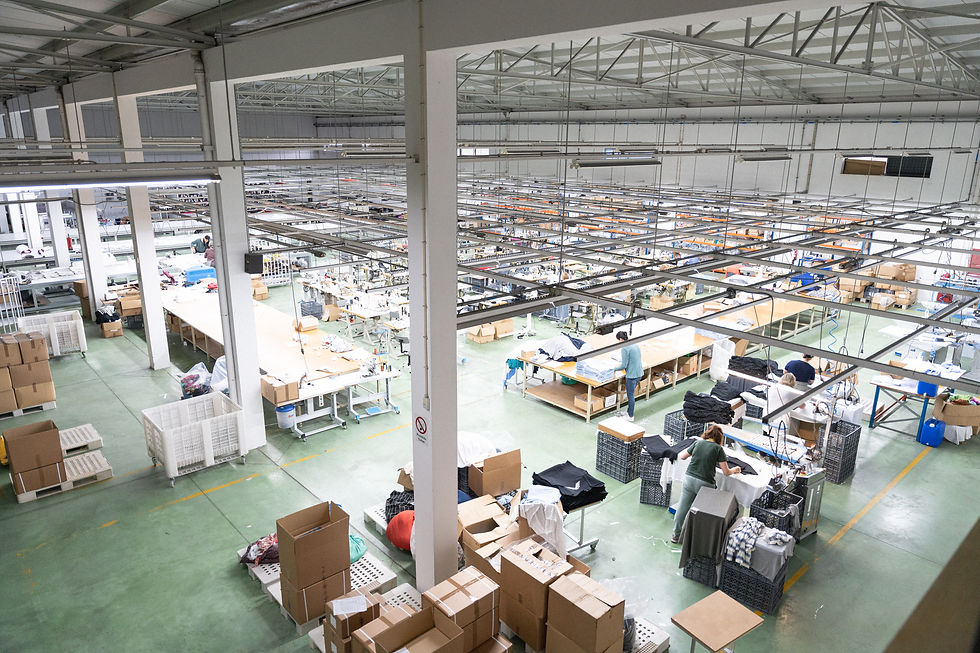
After the tech pack is submitted, sampling begins. During this stage, the fit, fabric, washes, prints, and construction details are reviewed before bulk production starts. Once approved, production moves into cutting, sewing, dyeing, embellishment, quality control, and shipping.
Throughout the process, LabwearOS gives brands visibility into production progress, quality control checkpoints, and timelines, reducing the complexity that usually comes with manufacturing custom apparel.
Instead of spending months sourcing factories, building supplier relationships, and managing fragmented workflows, brands can move from idea to production through one unified manufacturing system.


Comments